Introducing Uniko: Better Agents. Faster Answers. Free Memory.
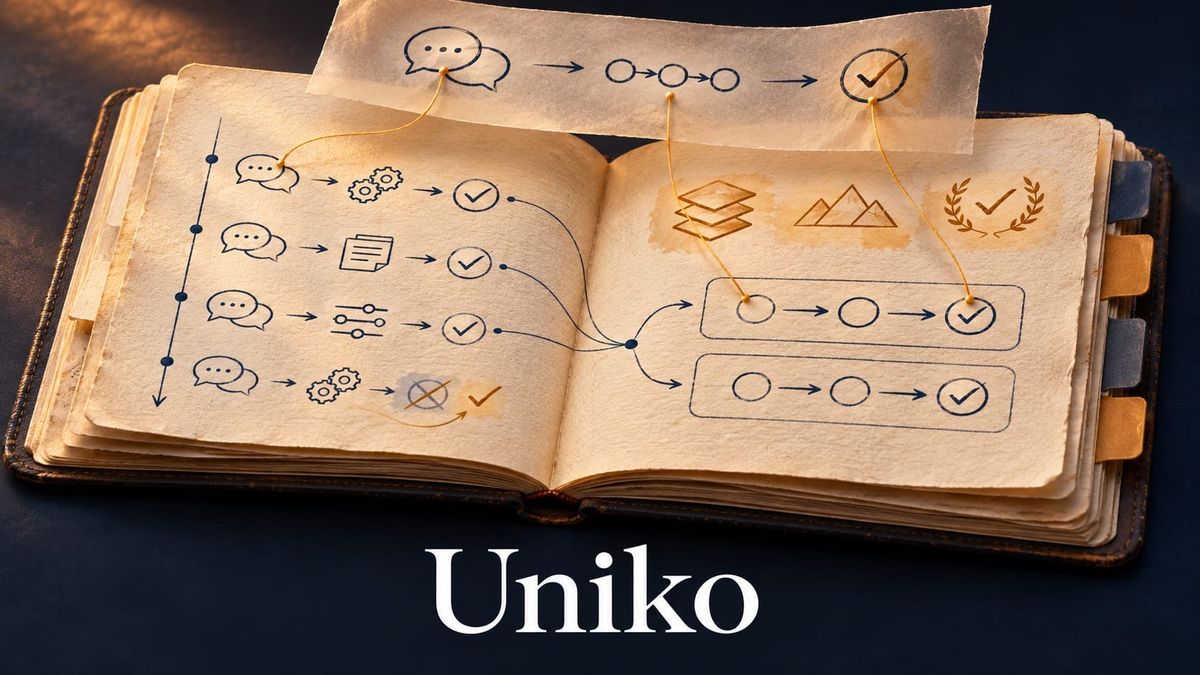
We’re introducing Uniko, an open-source cognitive memory engine for AI agents. It gives applications a way to remember conversations, keep track of changing information and use previous experience in later work. Developers get Rust and async Python interfaces, local memory processing and a record of the evidence behind what an agent knows.
Consider a customer who returns to a support conversation a week later. They have tried the suggested fix and have new results to share. The assistant needs their setup, the symptoms they reported and the steps already attempted so it can continue the investigation. That history may span several sessions, and some of the details may have changed along the way.
Uniko organizes the history around the people and conversations involved. It stores participants, messages and sessions, extracts observations and consolidates them into facts. Each fact stays connected to its supporting messages. As new information arrives, the memory can update while preserving the earlier history. The application retrieves the relevant information for the assistant, so the customer can spend their time explaining what happened since the last conversation.
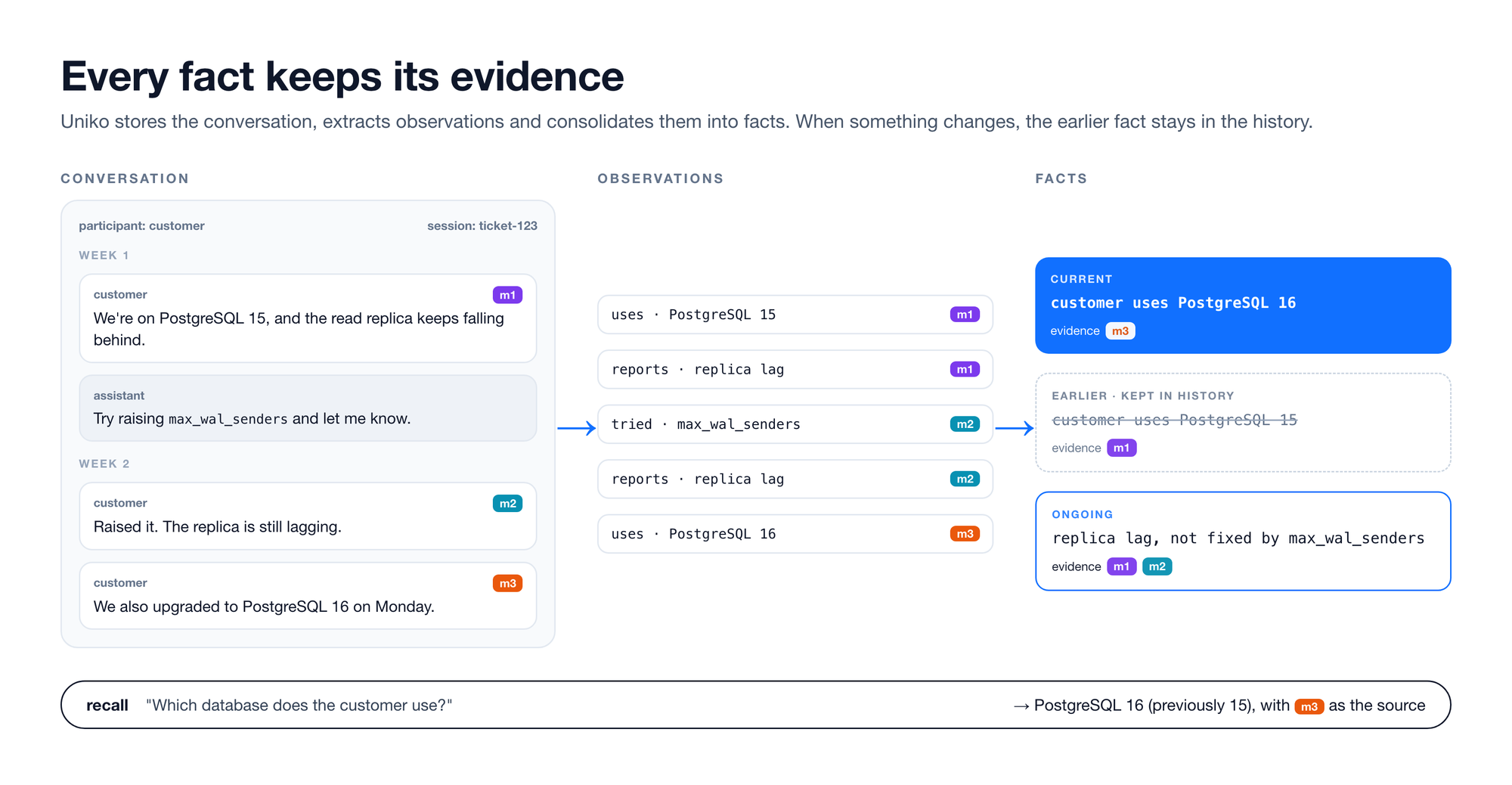
That connection to the source is useful beyond support. A research assistant can show the document behind a finding. An account assistant can identify who made a commitment and when. Developers also get a way to inspect an answer and follow the information that led to it.
How we arrived at Uniko
Uniko grew out of our work on Goal OS and the Knowledge Agent. Goal OS explored how agents could pursue ongoing goals with memory of their progress and outcomes. The Knowledge Agent explored how information from different sources could be connected and made useful to agents. Both pointed toward a memory system that could keep what was learned during work and make it available when needed again.
For a coding assistant, that might include the reasoning behind an architectural decision. The next time someone changes that part of the project, the assistant can retrieve the decision and the discussion that explains it. For an operations agent, the useful memory might be the steps that resolved a recurring deployment issue.
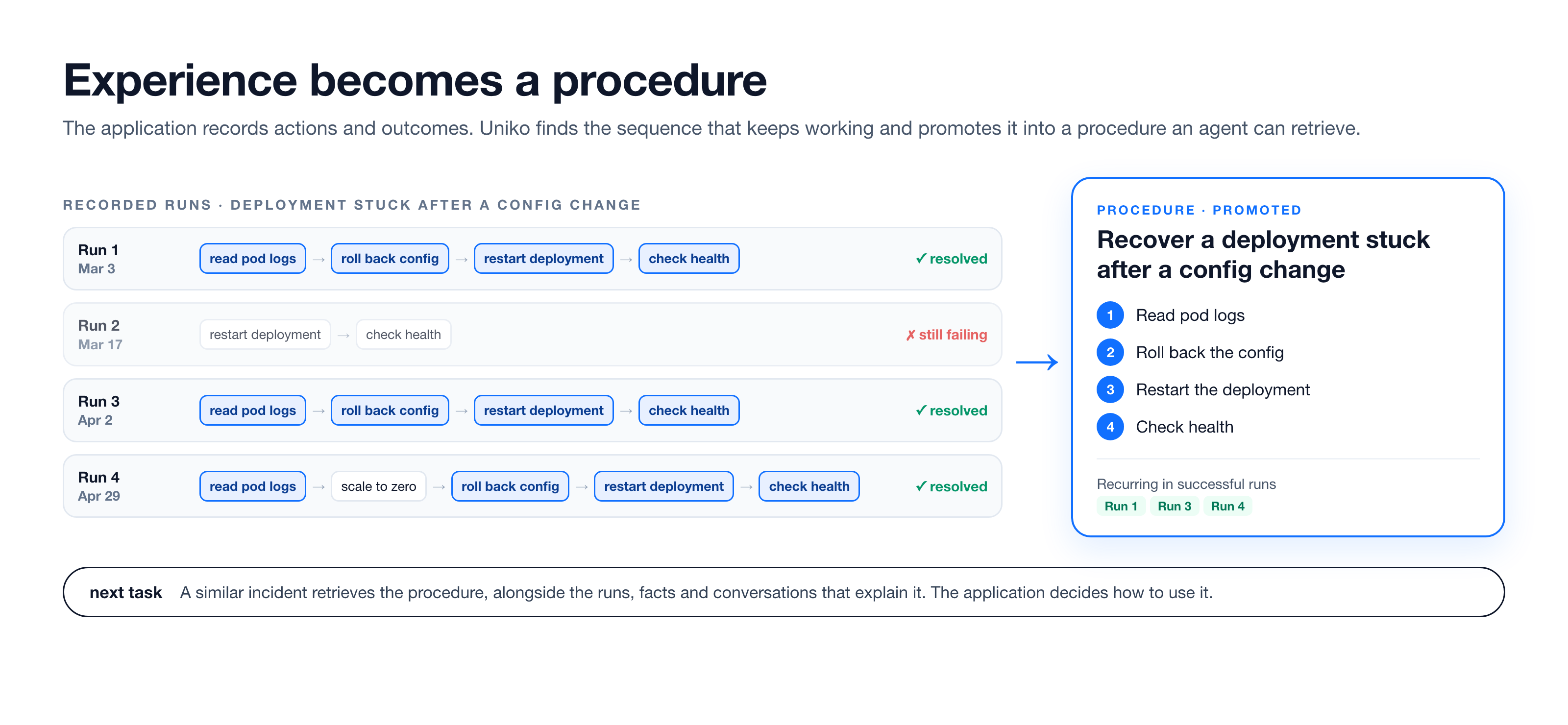
Uniko supports that second kind of memory through procedures. When an application records actions and their outcomes, Uniko can identify recurring successful sequences and promote them into retrievable procedures. An agent facing a similar task can consult those procedures alongside the facts and conversations that explain them. The application decides how to use that experience in the next task.
The speed difference
For us, paying for an LLM call every time an agent needs to remember something is the wrong tradeoff. We built Uniko to process conversations locally as they arrive, extracting information and organizing it for retrieval. Later, the agent can look up the relevant knowledge without asking an LLM to reconstruct it each time.
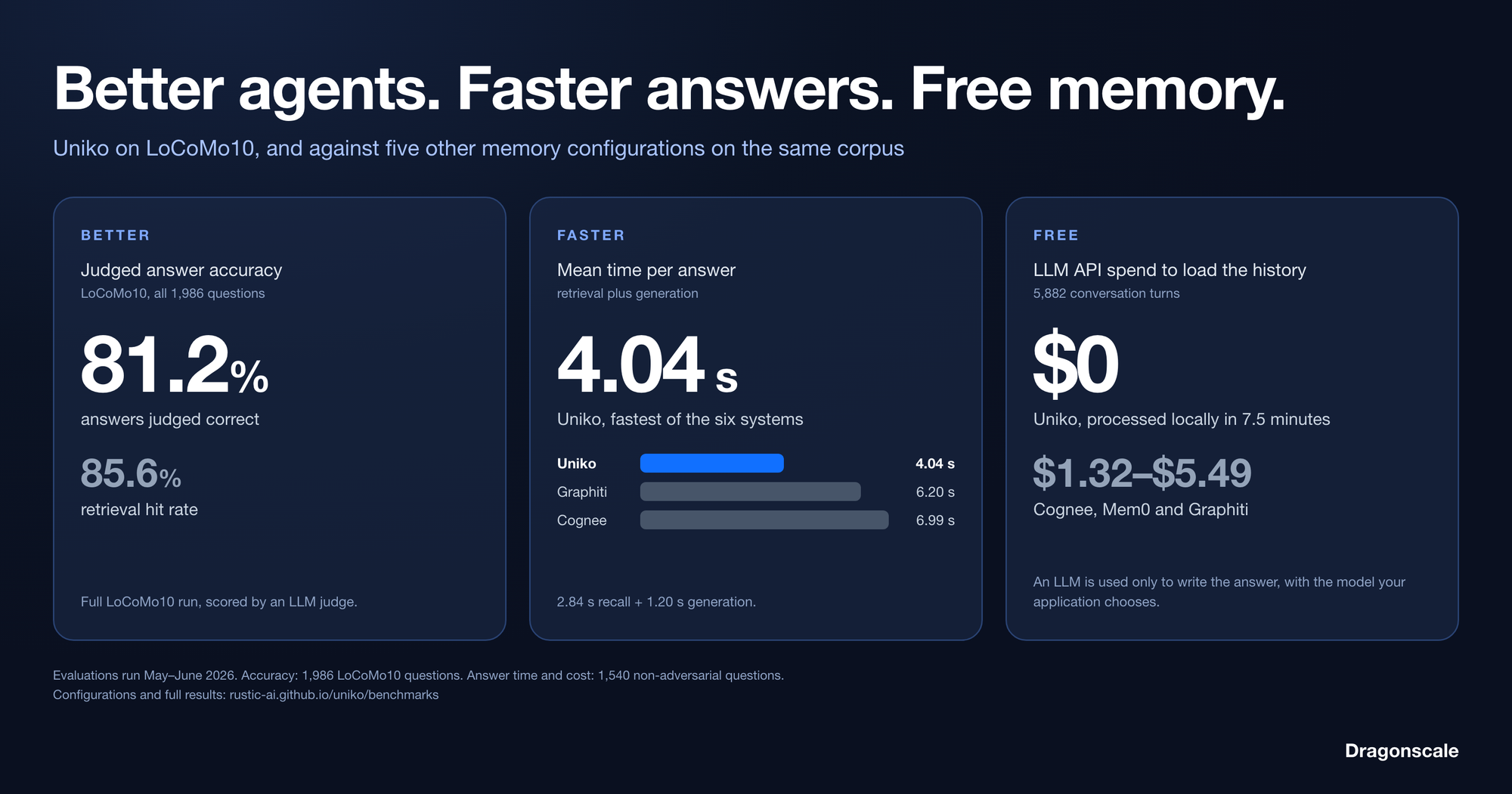
In our recorded benchmark comparison, Uniko loaded 5,882 conversation turns in 7.5 minutes, with $0 in LLM API spend.
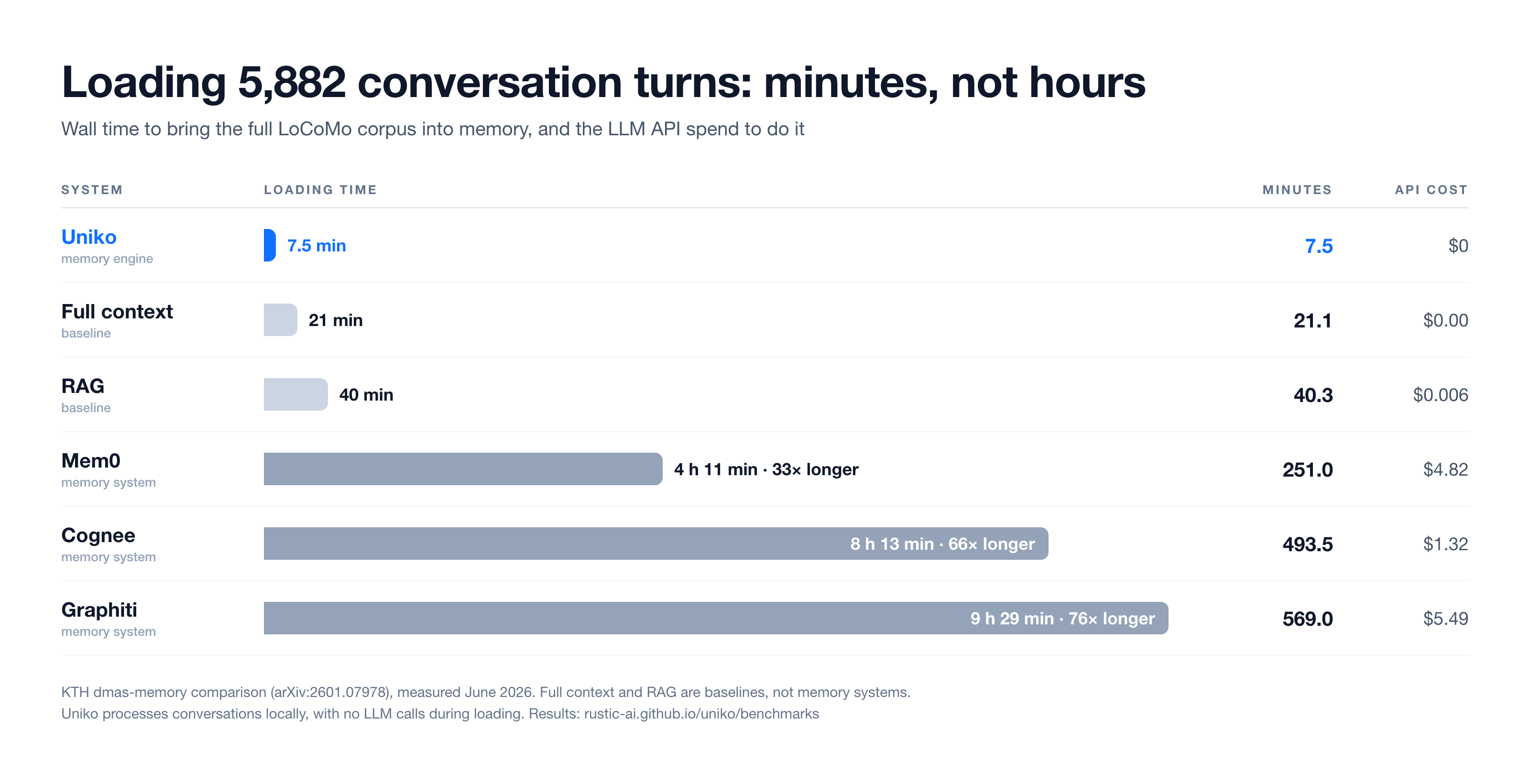
The difference matters when an application needs to bring an existing conversation history into memory: a corpus that took hours to load in those configurations was ready in minutes with Uniko. Answers also came back sooner. Uniko averaged 4.04 seconds per answer, including retrieval and generation, compared with 6.20 seconds for Graphiti and 6.99 seconds for Cognee. It was the fastest average among the six configurations compared.
On the full LoCoMo10 evaluation, Uniko achieved 81.2% judged answer accuracy and an 85.6% retrieval hit rate.
Results are from the May–June 2026 evaluations. Accuracy covers 1,986 questions; comparative answer timings cover 1,540 non-adversarial questions. The benchmark documentation describes the configurations and results.
Running it in your application
Uniko is open source. Its default pipeline stores, consolidates and recalls knowledge using local models, with no paid LLM calls for memory processing. Once the models are downloaded, that pipeline can operate offline. Memory runs inside your application, and you control where the data lives.
The engine underneath is uni-db, which combines graph, vector and full-text search with Locy rule execution. Uniko uses it to store connected knowledge, retrieve context and recognize patterns such as recurring successful action sequences. Rust and async Python interfaces let developers use this memory in their own agents and existing frameworks.
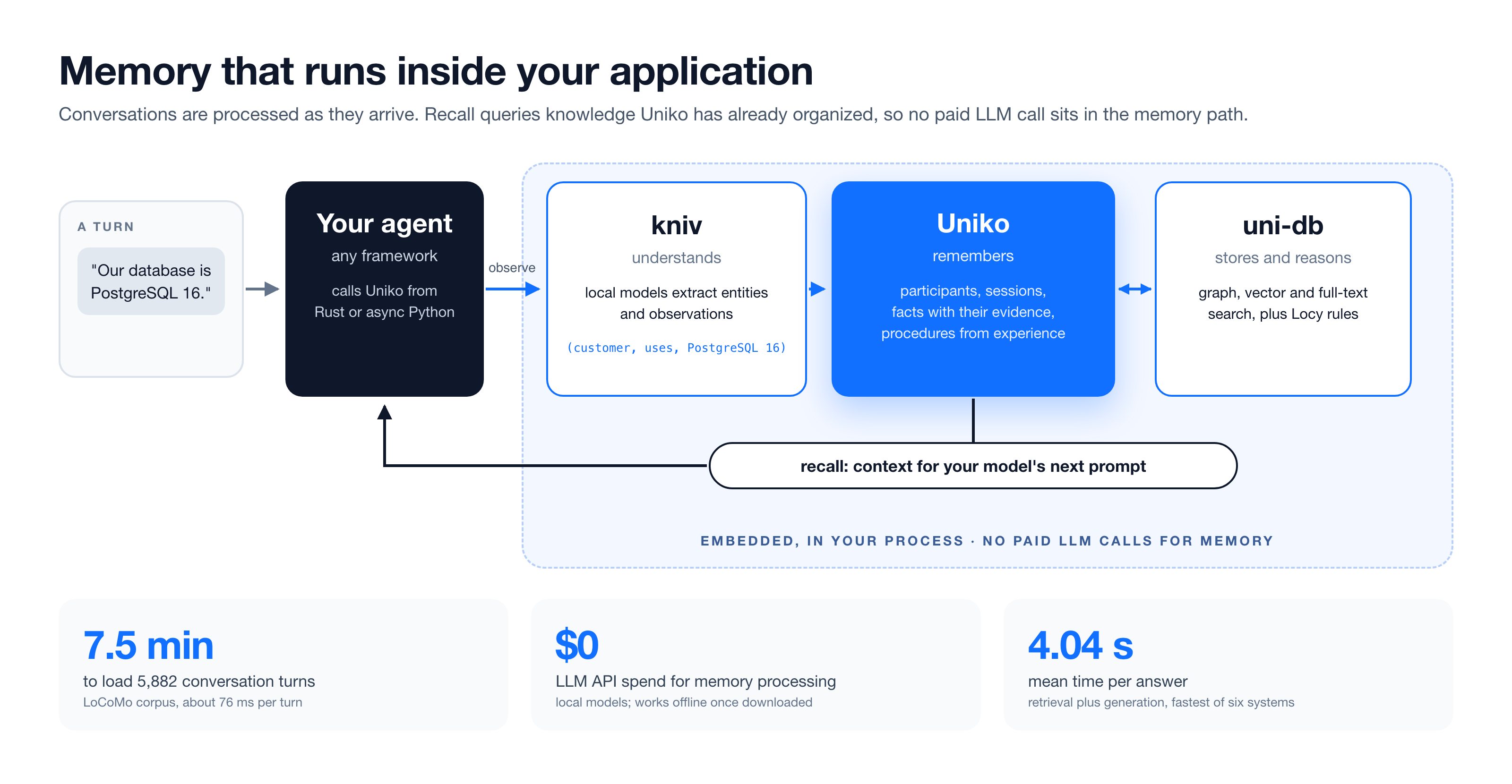
Here is the basic flow inside an async Python function, with uniko imported:
memory = await uniko.Uniko.open("./agent-memory")
agent = memory.agent("support")
session = agent.session("ticket-123")
await session.observe(uniko.Turn("customer", "Our database is PostgreSQL 16."))
await agent.consolidate()
context = await agent.recall("Which database does the customer use?")
The returned context is ready to include in the assistant’s next prompt. The application chooses the model that writes the answer.
If you’re building an assistant that people return to, try giving it memory of the work it has already done. Start with a conversation history or a record of completed tasks, then use the retrieved knowledge in the next session. You can find Uniko on GitHub and follow the getting-started documentation.
For more on the projects behind it, see uni-db, the embedded graph, vector and reasoning engine, and kniv v7, our local models for extracting knowledge from conversations and documents.